Two Coral Gables waterfront homes can look similar at first glance and still trade millions apart. If you’re buying or selling along Biscayne Bay or the Gables canal system, understanding what really drives value will help you price confidently and negotiate with clarity. In this guide, you’ll learn the specific factors that move numbers in our market, from navigable access and bridge clearance to lot frontage, seawalls, insurance, and approvals. Let’s dive in.
Water access sets the ceiling
Open bay vs. canal access
Not all water is valued the same. Direct Biscayne Bay frontage typically commands the highest premiums because it offers wide views and large-vessel usability. Deep-water canals with unobstructed access can trade close behind because many buyers prioritize navigability and dock function over a straight horizon view. Canals with restricted access usually appeal to smaller-boat owners and price accordingly.
Bridge clearance and air draft
For boaters, vertical clearance can be a hard limit on value. Fixed bridge heights and drawbridge schedules set the maximum vessel height that can reach a dock. Published clearances and federal rules shape these limits, which is why a “no low fixed bridges” note is more than marketing. It can materially change the buyer pool and the price a property commands. You can see how federal bridge regulations define these constraints in the Federal Register’s guidance on bridge operations.
Docks, lifts, and permitting
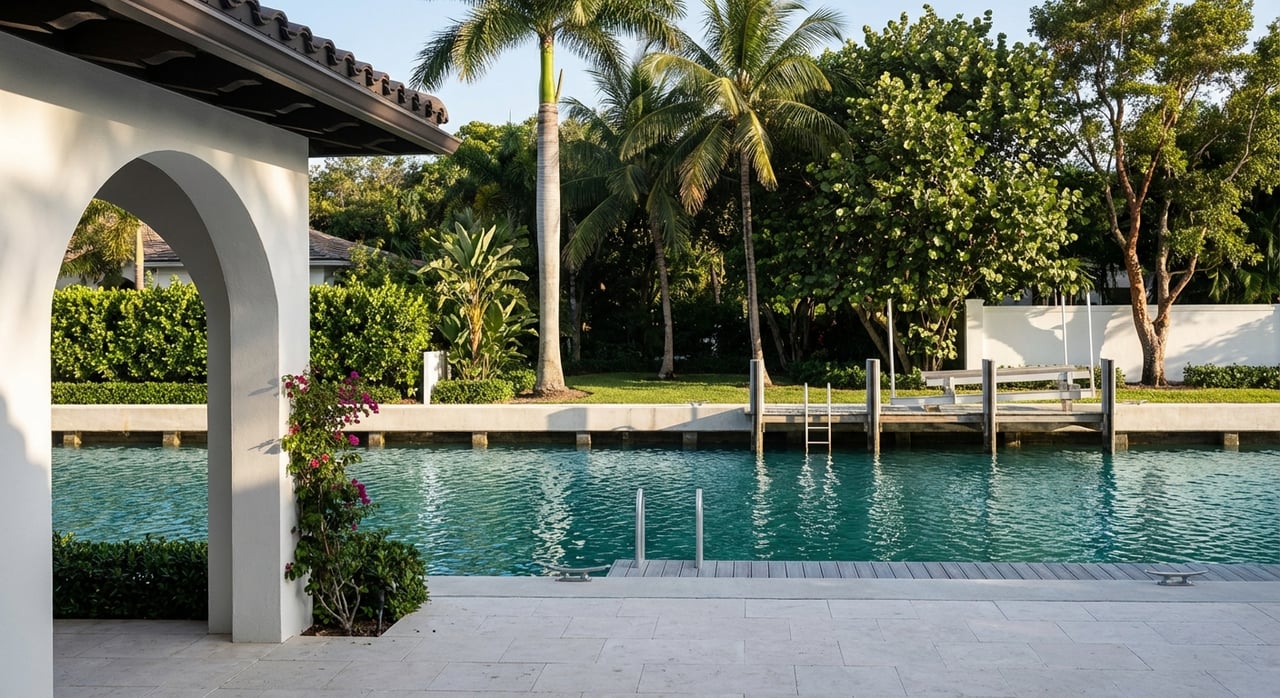
Dock design is not just aesthetic. Local rules in Coral Gables set setbacks, define how far a dock can project, and govern bulkhead standards. These limits directly affect the size and type of boat a property can support, as well as lift capacities and configurations. Confirm permits, structural reports, and any approvals that may have been required for in-water work. Reviewing the Coral Gables code summary for docks and bulkheads will help you understand what is typically allowed.
The lot matters more than you think
Linear frontage and a per-front-foot lens
Appraisers and experienced agents often evaluate waterfront land using a per-front-foot lens inside a tightly defined micro-market. After grouping comparable sales by access type, they study how price shifts with linear water footage and lot usability. This approach is common in waterfront valuation and is recognized in appraisal literature. For background on frontage-based analysis, see this overview of land-valuation principles from the Appraisal Institute curriculum summarized here.
Lot shape, depth, and usable yard
A wide, shallow lot can outperform a narrow, deep lot if it provides more contiguous terrace space, better view corridors, and easier dock configuration. Buildable area after setbacks and tree protections is especially important in Coral Gables. Before you price or plan, pull the parcel record and recent survey. Start with the Miami-Dade Property Appraiser for dimensions and mapping layers, then confirm local development rules and review procedures in the city’s Development Review Process Handbook.
Orientation and view quality
Sunset exposure, breadth of horizon, and whether primary living spaces frame the water all influence how buyers respond. Nearby docks, mangrove corridors, and channel activity also shape perceived quality. These are lifestyle variables, yet they regularly show up in paired-sales analysis and on-the-ground negotiations.
Architecture, approvals, and renovation level
Design governance in Coral Gables
Coral Gables maintains a strong design-review culture. The Board of Architects process and historic-preservation framework help stabilize neighborhood character and reduce the risk of incompatible redevelopment. That sense of order is part of the product many buyers seek, but it also means you should plan renovation timelines around review and permits. The city outlines procedures and submittal steps in its Development Review Process Handbook.
Resilience and turn-key systems
Waterfront buyers often pay premiums for homes with modern systems and risk-mitigation upgrades. Impact-rated openings, recent roofing, updated MEP systems, and a newer seawall add confidence. Some improvements can reduce insurance costs or improve lender appetite, especially when they meet Florida code and mitigation standards. For a primer on impact protections and regulatory context, review this overview on impact window requirements in Florida.
Insurance, elevation, and carry costs
Under FEMA’s Risk Rating 2.0, flood-insurance pricing is more property specific, with factors like first-floor height, distance to water, and replacement cost influencing your premium. That means two nearby homes can have very different carrying costs. Order an elevation certificate and obtain flood quotes early to avoid surprises and to strengthen negotiations. Learn how pricing works in FEMA’s summary of Risk Rating 2.0.
Seawalls, permits, and long-term risk
Why permit history matters
Seawalls and work over tidelands usually require multiple layers of approval at the city, county, state, and sometimes federal levels. Recently, Miami-Dade County updated its rules to create a shorter, more predictable path for many seawall or bulkhead replacements and to authorize certain living-seawall materials in defined cases. Knowing whether past work followed these processes can reduce uncertainty and support financing. Review the county’s ordinance discussion on seawall permitting reforms.
Seawall condition is near-term capital
A failing seawall is one of the fastest ways buyers adjust price at contract. Replacement can require staging access, tree work, environmental surveys, and multi-agency permits, which adds time and cost. Miami-Dade’s reforms help with predictability, but they do not remove technical requirements. For a practical look at why these projects take months and involve many steps, read this overview of permitting and project timelines.
Screening long-term flood exposure
Tools that visualize sea-level rise and tidal effects are now part of many buyers’ diligence. NOAA’s Sea Level Rise Viewer allows you to see how incremental water-level changes might affect a parcel and its surroundings. It is not a prediction tool, but it provides useful planning context that can inform offer terms and improvement plans. Explore the NOAA SLR Viewer to understand potential exposure.
How Coral Gables compares nearby
Coral Gables enclaves like Gables Estates, Cocoplum, Old Cutler Bay, and Deering Bay feature large lots, established architecture, and a limited supply of direct-bay parcels. Scarcity plus proximity to daily amenities supports strong pricing among primary-residence buyers. In contrast, barrier-island areas can involve a different ownership profile and risk posture. Recent reporting points to insurance and assessment pressures that shape affordability and liquidity on islands, a consideration some buyers weigh against the beachfront lifestyle. For context, see local coverage of affordability pressures on island communities.
A simple valuation checklist
Use this quick lens to explain pricing gaps between two seemingly similar homes:
- Water type and navigability. Rank access as open bay, deep canal without fixed bridges, then canals with bridge or width restrictions. Document boat-type compatibility and any known bridge clearances.
- Linear waterfront footage. Analyze recent sales in the same access category and apply a per-front-foot lens as a starting point, then adjust for lot depth, usable yard, and view.
- Dock and seawall condition. Verify permits, structural reports, and lift capacities. Unpermitted marine structures reduce buyer confidence and can impair financing.
- Elevation, flood zone, and insurance. Order an elevation certificate and get NFIP and private-flood quotes early. Risk Rating 2.0 makes property traits central to pricing.
- Architecture and approvals. In Coral Gables, design review and potential historic considerations affect timelines. Present permits and qualified renovation receipts to support value.
Documents to collect before you offer
- Recent boundary and topo survey showing the waterline and linear frontage.
- Seawall and dock inspection reports plus permit history at the city, county, and state levels.
- Elevation certificate and current NFIP and private-flood quotes.
- A comp set grouped by access type that reconciles per-front-foot impacts.
- City development-review guidance to confirm what future changes are likely to be approved.
Ready to buy or sell in Coral Gables?
If you want a clear, data-led plan for pricing, preparation, and negotiations, you deserve a local advisor who lives this market every day. As a Miami-based luxury specialist with global reach through Barnes International and integrated property management for absentee owners, I help you line up permits, vendors, and strategy so you move with confidence. When it is time to talk details, book a private consultation with Sebastien Sabet.
FAQs
What drives the biggest price differences in Coral Gables waterfront homes?
- Water access and navigability, bridge clearance, linear frontage, seawall and dock condition, and the level of renovation and approvals most often explain large pricing gaps.
How do fixed bridges and air draft affect my boat and my home’s value?
- Bridge clearances create a hard cap on vessel height and can limit which buyers your property fits, which is why federal rules on bridge operations matter for value; review the Federal Register guidance.
Which permits should I check for docks, lifts, and seawalls in Coral Gables?
- Verify city approvals and any county, state, or federal sign-offs for marine work; local dock and bulkhead standards are summarized in the Coral Gables code overview, and Miami-Dade’s seawall reforms affect timelines.
How can I gauge buildability and lot value before I bid?
- Pull parcel maps and prior surveys from the Miami-Dade Property Appraiser, then cross-check timelines and process steps in the city’s Development Review Process Handbook.
Do resilience upgrades like impact windows make a difference for buyers and insurers?
- Yes, modern systems and protections can improve underwriting and reduce risk; see this Florida overview on impact window requirements and consult your insurer for mitigation credits.
How does FEMA’s Risk Rating 2.0 change flood-insurance pricing on bayfront homes?
- Premiums are now more property specific, with factors like first-floor height, distance to water, and replacement cost shaping quotes; review FEMA’s Risk Rating 2.0 summary and obtain quotes early.